Behind the Zine Scenes #5: Fanzineist Vienna Art Book & Zine Fair
After we both settled down from our travels, we met over Zoom, where Deniz reflected on how Fanzineist (pronounced FAN-zeen-ist) Vienna has evolved over the years, what it takes to keep it going, and what to look forward to in this year's edition.
CJ: How would you describe Fanzineist to someone encountering it for the first time?
Deniz: Fanzineist Vienna Art Book & Zine Fair is a platform for independent publishing, artist books, art books and zines. It brings together creators from around the world in a shared space of experimentation and exchange. When it began in Istanbul in 2016, it was one of the first zine festivals in Turkey. Back then it was called the FanzineIST Festival — Zine Fest of Istanbul. By 2017, we had a second edition in Istanbul, which was the only zine festival happening at the same time on two continents, both Asia and Europe. In 2017, we had a second edition in Istanbul.
When I moved the event to Vienna in 2019, it evolved into the Fanzineist Vienna Art Book & Zine Fair. While the format became more international and structured, the DIY and independent spirit remained at its core, and the focus has always been on fostering meaningful connections between creators and audiences who value alternative voices.

CJ: What was it like to start the first edition in Istanbul?
Deniz: I had been following art book fairs and zine festivals around 2014 and 2015 — visiting them and keeping up through social media — and I kept asking myself: why doesn't something like this exist in Istanbul? So I decided to start one.
We organized the event across five different venues over three days, featuring concerts, DJs, workshops, and talks. It wasn't just a zine festival, but also something like a mini music festival.
We hosted punk, experimental, indie rock, and garage bands, and it gradually became a gathering centered around publishing, music, and alternative forms of production.
CJ: Did that mix grow out of your own background and interests?
Deniz: Definitely. From the beginning, I wanted to build something that connects zines, art books, alternative music, and experimental culture. I've always been into B-movies, experimental music, jazz, and punk — and I like bringing all of these elements into the same space.
Part of the inspiration also came from my experience at CRACK! Festival in Rome, Italy. There's really nothing else like it: a small-press celebration that feels more like a carnival, held in a 19th-century military fortress that has been turned into an occupied squat just outside the city, filled with screen prints, murals, and alternative concerts.
It made me realize how expansive this kind of event could be. This year, for example, we'll feature a Balkan band alongside a rumba and cumbia ensemble. My goal is to create space for alternative voices in the city, while also bringing in international artists.
"People build friendships here. They share moments. After the event, there are collaborations between artists and publishers. Some people become flatmates. Some people become lovers."
CJ: Since you attend many zine fairs yourself, I'm curious what you think makes Fanzineist feel distinct.
Deniz: Two years ago, a journalist who attended Fanzineist wrote a report and said something like: "I found my own tribe and own community at this fair." That meant a lot to me, because that's exactly what I want the fair to do. This isn't just a place where people come to show and sell their zines. People build friendships here. They share moments. After the event, there are collaborations between artists and publishers. Some people become flatmates. Some people become lovers. There are all kinds of possibilities. Of course, I want everyone to sell their work successfully — I'm a zine maker and artist myself, so I completely understand their perspective. But more than anything, my priority is to build a community. I think people really sense that, and that's why most exhibitors leave Vienna feeling happy and inspired.


"I try to balance quality, variety, and the overall narrative of the fair, [...] and to highlight different media, approaches, and perspectives while keeping the festival cohesive."
CJ: The website says you've received over 370 applications from 45 countries this year. What does the curation process look like after that?
Deniz: It's really difficult to select the final lineup. I do all the curation by myself. When I saw the number of applications, I was so happy, but also anxious, because we simply can't accommodate everyone. The space is already huge — you can easily fit 170 or 180 exhibitors, but not 300. So every year the process is a mix of excitement and challenge. I try to balance quality, variety, and the overall narrative of the fair, to showcase emerging voices alongside established artists, and to highlight different media, approaches, and perspectives while keeping the festival cohesive. It takes more than a month and a half just to work through the applications. Even after the form closes, people keep emailing to ask if there's still a chance. Right now, for example, the waiting list already has more than 100 people. But it's incredibly rewarding to see everything come together at the end. When the fair opens and you see 180 artists and publishers in front of their tables, it's an amazing feeling.

"We're trying to break down borders, and in times like these, that feels more important than ever."
CJ: One thing that really stands out for the festival is the remote participation option — the idea that even people who can't physically be there can still be part of it. How did that option come about?
Deniz: The roots go back to 2011, when I was doing my military service. I was strongly against being there, but over time I found a way to transform that experience into a source of inspiration. I made an international open call, inviting people to send me letters. In the end, I received more than 300 letters from around the world, and I replied to each one by hand.
At the end of that period, I turned this exchange into an exhibition of the letters — first in the city where I was stationed, and later in Istanbul.

Deniz: So the mail art idea came from those times. This option has been available since the very first edition of Fanzineist in 2016, where we had an open call for people to participate via mail. Then during the coronavirus period, remote participation became a practical response to travel restrictions, which has proven to be a valuable way to include people who otherwise couldn't attend. Now in addition to mail art, we also provide a digital space for remote participants to represent their work, with videos, images, and sometimes with live interaction. And there's a virtual exhibition room for artists and publishers to exhibit art books and zines available for purchase.
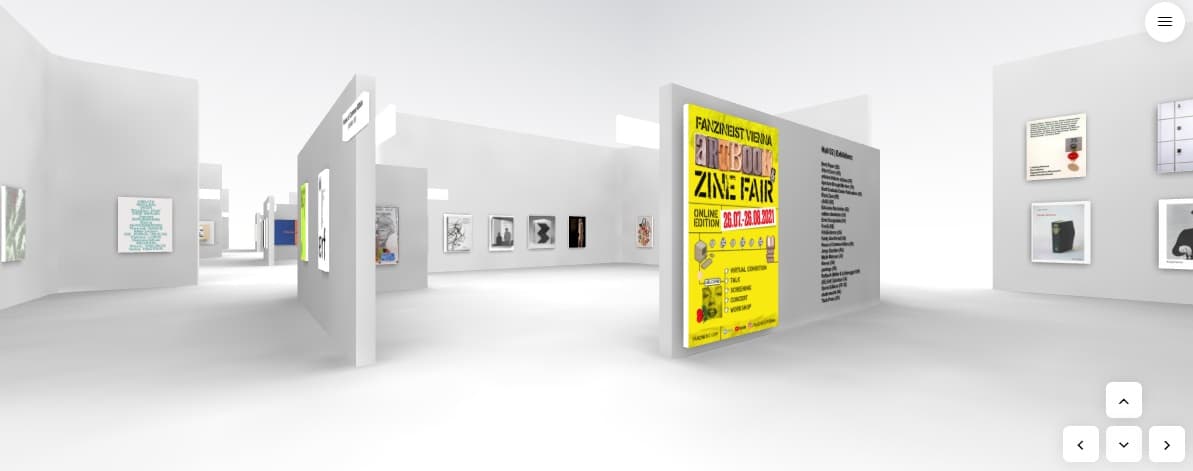
Deniz: With remote participation, there is no curatorial selection. We want to keep it open, accessible and democratic for everyone around the world.
This year, we've already received packages from more than 45 countries, including India, Canada, Brazil, Germany, South Africa, Saudi Arabia, New Zealand, Australia, Chile, England, Uganda, and Algeria.
We will even be exhibiting a zine by a seven-year-old from Indonesia — and it's an amazing piece of work.
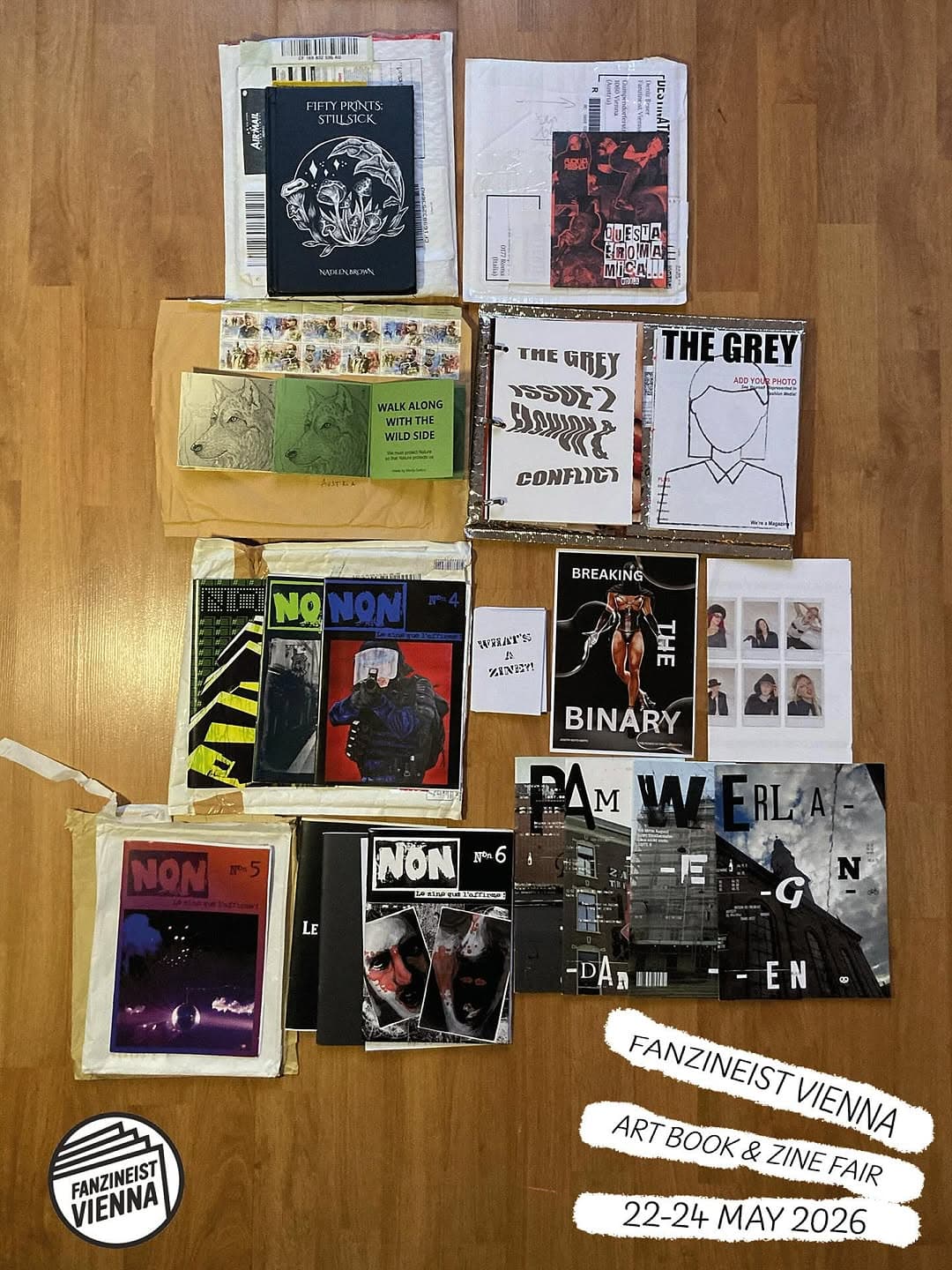
Deniz: Last year, we received more than 400 packages, including over 1,000 zines and art books from 50 countries — and we exhibited all of them.
Of course, nothing replaces the in-person experience, but remote participation helps Fanzineist remain truly global and inclusive.
We're trying to break down borders, and in times like these, that feels more important than ever.

"It's a lot of work. Sometimes it really eats into my own artistic practice. [...] But still, it's really rewarding to see the result."
CJ: How do you organize something of this scale? What does the team look like?
Deniz: Most of it is still just me. Every year, it takes around seven months of work — it's really a project driven by dedication and passion.
At the moment, our team includes an art director, Evi Pribyl, who helps shape the visual identity of the fair, as well as supports management and sponsor relations. We also have an intern from Sweden, Agnes Stenqvist, who has been a great help with communication, social media, design, and archiving. Big thanks to them!
In many previous years, though, there wasn't even a core team — during the pandemic, I organized digital fairs almost entirely on my own.
Nowadays, around the festival, the team expands to about 20-25 people, including paid staff and volunteers supporting everything from on-site logistics to social media.
But the work throughout the rest of the year still falls largely on me.

CJ: And what does that year-round work look like, outside the festival weekend?
Deniz: Most of the year, I spend my time developing ideas, designing programs, reviewing submissions, and maintaining relationships with artists, publishers, and partners, as well as managing financial administration. I also code the website, handle marketing, find partners and sponsors, reach out to brands, and apply for public funding.
It's a lot of work, and sometimes it really eats into my own artistic practice. If I weren't organizing the fair, I would probably focus much more on my own work. But it's still incredibly rewarding to see the results.
After each edition, I usually go on an art book and zine fair tour, visiting at least ten countries — including Japan, Canada, Italy, Czechia, Greece, and Germany. These trips allow me to present my own work, while also promoting Fanzineist, building networks, bringing in new exhibitors, and developing new partnerships.
It really is a year-round project!

"We're not only looking for financial support. We're looking for people and institutions who understand what we're trying to build."
CJ: How have you kept it financially viable over the years?
Deniz: Over the last ten years, we've received public funding maybe three or four times, which isn't very often. That's why I've gained a lot of experience organizing DIY-style, without reliable institutional support. This year, we didn't receive any public funding, so we'll have to make the numbers work through our own ecosystem.
Exhibitor table fees help, and we'll also run our own bar and canteen during the fair. We're even considering an art book and zine lottery so visitors can support Fanzineist directly and receive goodie bags in return. Beyond that, we have hotel and hostel partners who offer discounts to exhibitors, and several print sponsors who produce our booklets, posters, and flyers.
What matters most is finding partners who truly understand the independent, experimental ethos of Fanzineist. We're not only looking for financial support — we're looking for people and institutions who understand what we're trying to build, and who won't try to pull it in a direction that doesn't belong to it.
"Seeing the effect the fair has on other creators motivates me to keep producing my own work."
CJ: You're doing all of this as an independent publisher and artist yourself. Has organizing Fanzineist influenced your own personal practice?
Deniz: Very much. It has expanded my perspective on the global independent publishing scene and pushed me to experiment more in my own practice. Managing something at this scale has sharpened my skills in curation and collaboration in ways I wouldn't have expected, and it's shown me how ideas can travel and land in completely unexpected places. But the biggest thing is community. Seeing the effect the fair has on other creators — watching people find their people, start collaborations, change direction because of a conversation they had at a table — that motivates me to keep producing my own zines and artist books. And practically, through organizing Fanzineist, I've learned how to manage my own artistic career better: how to approach partners, work with brands, apply for funding. So I'm genuinely learning constantly.
"Every year I dig through the internet to find films about zines, then contact the directors for permission to screen them."
CJ: What are you most excited about for this edition, besides the Balkan and cumbia bands?
Deniz: I always have mixed feelings in the weeks leading up to the event. I'm excited, but also anxious, thinking: "There will be 170 artists and publishers from all around the world — I hope they enjoy it, I hope everything goes smoothly..." Still, excitement always wins.
I'm especially thrilled about the diversity of participants — over 170 artists and publishers from 30 countries — and the variety of formats, from zines and artist books to limited-edition prints. We're organizing bookbinding and zine workshops, as well as film screenings, which are very important to me. Every year, I dig through the internet to find documentaries or films related to zines and art books, then contact the directors or owners to get permission to screen them.
This year, we also held an open call for musicians and received over 150 applications. There will be four or five live concerts and six or seven DJ sets. Fanzineist is part art publishing fair, part music festival.

Deniz: And the venue itself, Semperdepot, is truly extraordinary. Dating back to the late 19th century — it was built between 1874 and 1877 — it's full of history — even Robin Williams once used it to shoot a video clip. It has always been one of my dream venues for an event like this.
Since 2023, we've been hosting Fanzineist there in collaboration with the Academy of Fine Arts Vienna. When you walk in and see that historic building filled with zines, artist books, and music, it just feels incredible.

"It takes so much time — seven months every year, but seeing the result makes it worthwhile."
CJ: What would you say to someone who wants to build something like this in their own city?
Deniz: Start small, stay consistent, and cultivate a community. Don't worry too much about perfection or immediate recognition. The real value lies in creating a space where independent voices can meet and be seen. Focus on authenticity. Let your own curiosity drive it. Every connection you make can lead somewhere unexpected. That said, I wouldn't recommend organizing a large-scale event like ours to just anyone. It comes with a huge amount of responsibility, and can be really stressful at times. It takes so much time — seven months every year, but seeing the result makes it worthwhile. I'm happy about my life. I get to work on my passion, and we are building our own microcosmos.