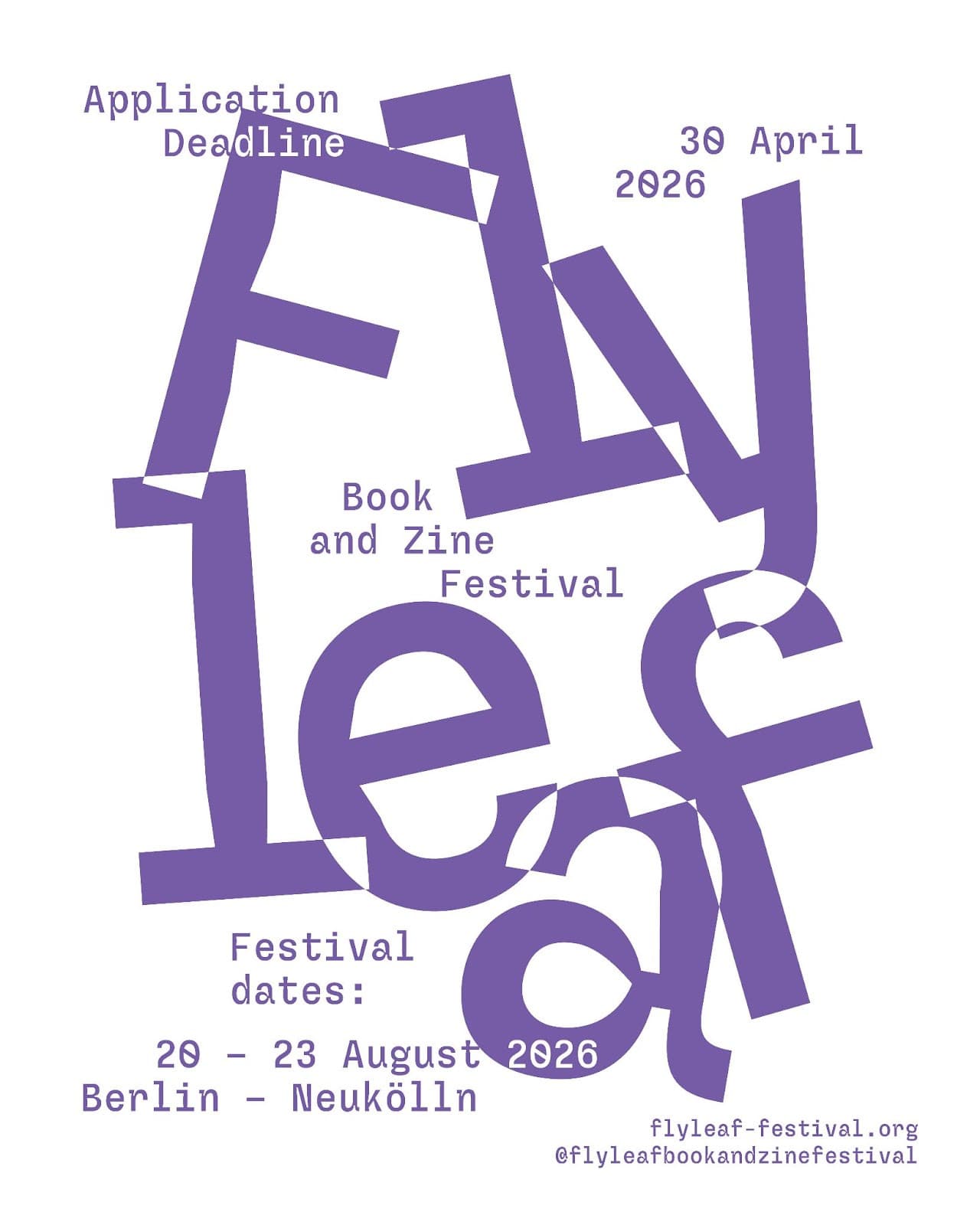
Behind the Zine Scenes #4: FLYLEAF Book and Zine Festival
In preparing for our conversation, I realized that very little about FLYLEAF is incidental. As a co-host to the festival (her collaborative partner is Stefan Maneval from Flaschrum Books), April brings to it over a decade of experience in organizing residencies, gatherings, and socially engaged events, and that depth shows in the way the whole festival is composed: the walk, the atmosphere, the opportunities for conversation, even the cake. And I wanted to understand how it all came to be.
CJ: Before we dive into this festival, could you share a little bit about your background? What drew you to working in independent publishing?
April: Sure. I kind of did a full circle. I studied photography in the 90s, and because I had no money to invest in photography, I started going to this flea market next door to where I lived. I became obsessed with it. I went every weekend and started collecting other people’s photographs. Out of that experience I became incredibly inspired by the photographs I was finding, and was motivated to start writing short vignettes and stories with those photographs and I made lots of small publications. I also did collage work for quite a long time. Then I kind of moved away from it for a while. But books and publications and zines have always been part of what I do, just never as focused as it is now. Things eventually came back around to where I am now, when I got a hold of Miranda, my risograph machine.
CJ: Ah, okay. I thought of Miranda July. There’s that Miranda.
April: There’s Miranda July. My riso duplicating machine is partially named after Miranda July, but not one hundred percent. I named her in collaboration with my dear friend Idalia Sautto, who runs Pitzilein Books in Mexico City. She and I have done many projects together. She brought it to my attention that one cannot work with machines unless they are named, because every machine has its own personality. So you need to be in conversation with your machine on a first-name basis. She came to Berlin to do a risograph workshop, and I had just acquired the riso machine. She asked me, “So what’s the name of your machine? I need to know how to introduce her when the workshop attendees come.” I said, “I don’t have a name for her.” And she said, “Well, we have to sit down now and discuss this.” And, we decided on the name Miranda — partially because of Miranda July but also because the name Miranda has the word ‘mira’ — meaning to look — in Spanish.
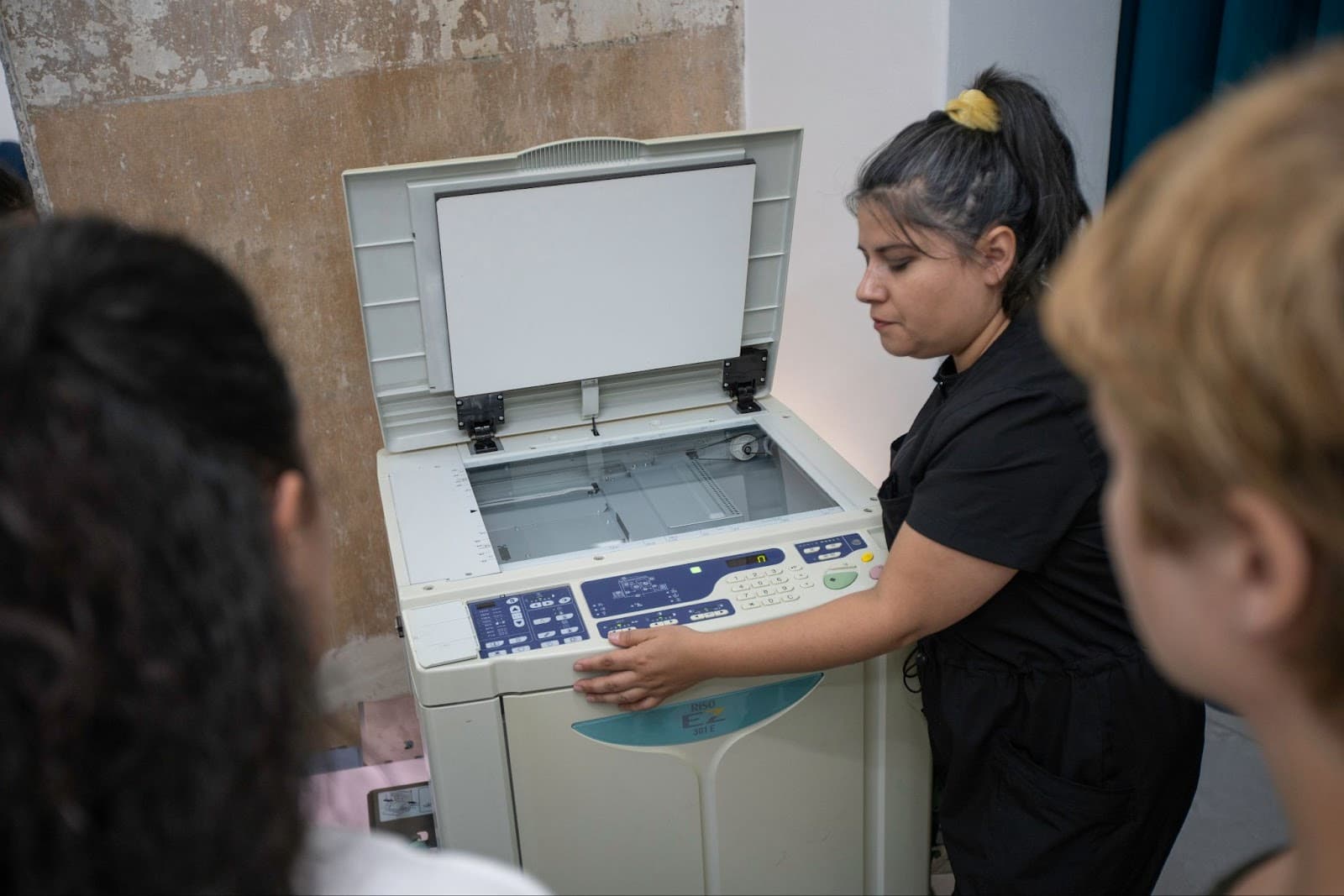
April: Anyway, Miranda joined the studio almost four years ago. And when I wasn’t using her for my zine class I was teaching at Bard College Berlin, I kept looking at her and thinking, what can I do with you? The thing with Miranda is that she didn’t come with a computer connection. Most Risograph machines work through a computer interface where you can do layouts and design digitally, but she doesn’t have that. Like all Riso machines, she has a scanning bed. So I would print hard copies on my home printer first and then print with her, but I also started putting random objects on the scanning bed — plants, food, my cats, whatever. Another limitation is that she only has a one color drum, so I’m relegated to printing one color at a time. Right now it’s bright red.
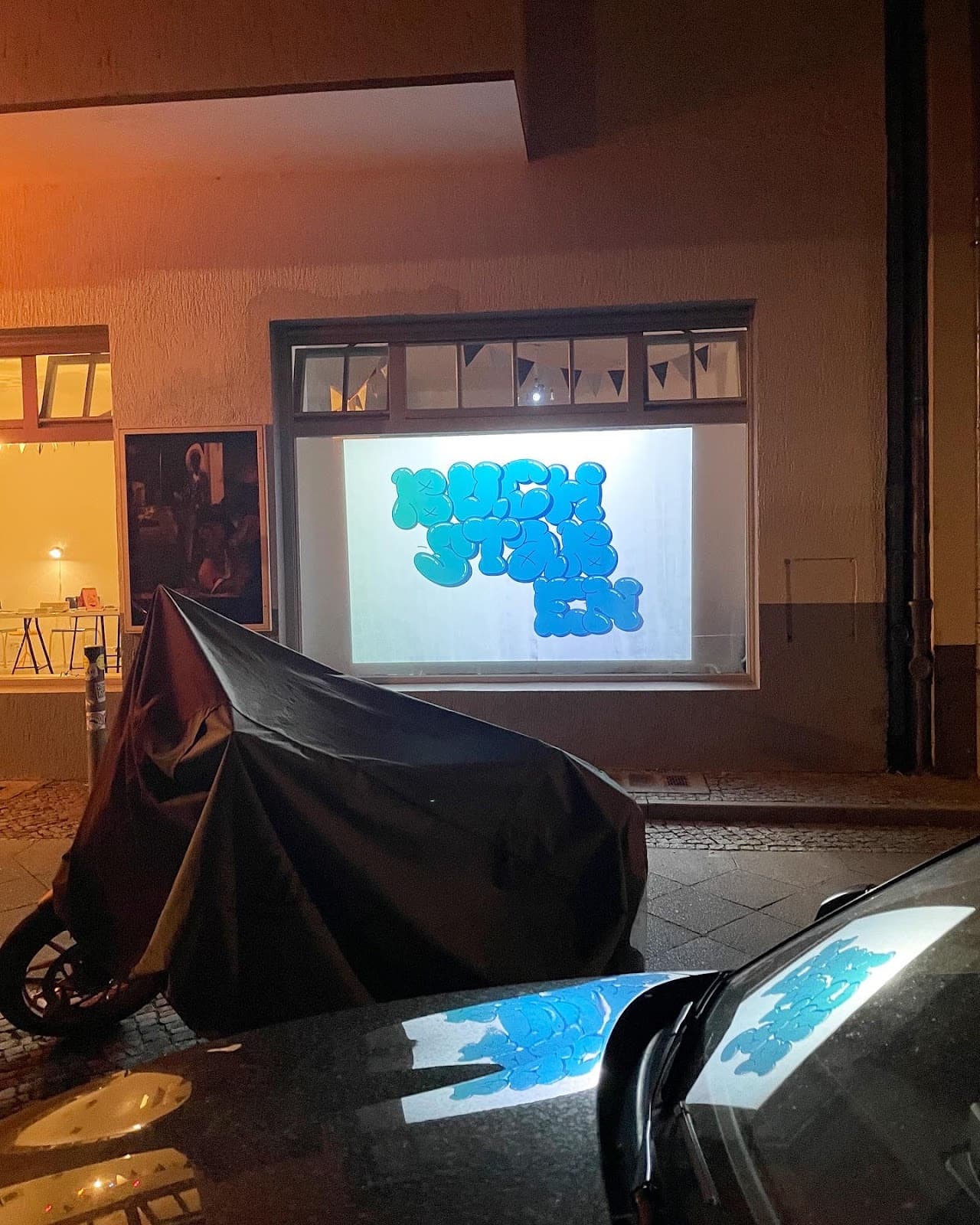
April: Out of those restrictions came this exciting moment where I started thinking about what Miranda might actually be capable of. And in 2023 I organized my first book fair with Idalia called Buchstabensalat. Buchstabensalat means cable salad — you know when you’re at your desk and you have your printer, your computer, your phone, and all these cables under the table, and they’re all kind of mixed up in this frustratingly funny way — that’s a Buchstabensalat. We named the first iteration of FLYLEAF Buchstabensalat, and the mini festival happened only in our space. We did it a few days before Miss Read, the big book fair in Berlin. We invited publishers through an open call, and Buchstabensalat was for two or three days. Then we went through the list of publishers who were coming from outside the country to participate in Miss Read, and we sent them private messages on Instagram saying, "Come see us, come have a cocktail, come say hi — we want to meet you." We sent out maybe about fifty to seventy-five messages. Miss Read has around 350 publishers, and maybe twenty people came. It was amazing. We met a lot of people that way.
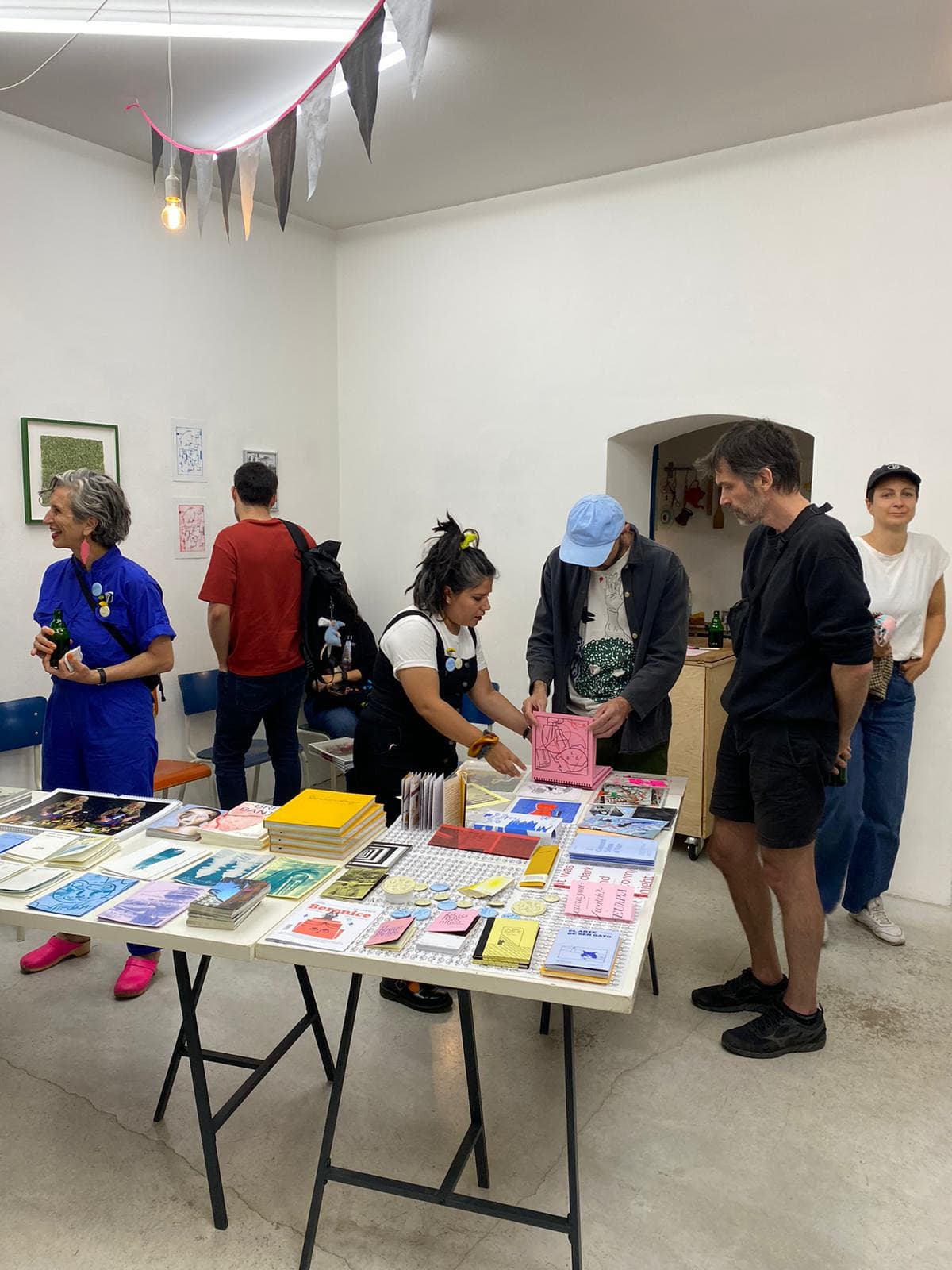
April: Then at Miss Read, Idalia had a stand there, and we went to all of those publishers’ tables and continued the conversation. We said, hey, thanks for coming, we wanted to see what you do now — tell us what you're up to. It was this wonderful moment of building the foundation, I think, for FLYLEAF.
CJ: So you kind of made use of the fact that Miss Read had already brought all these international publishers to Berlin.
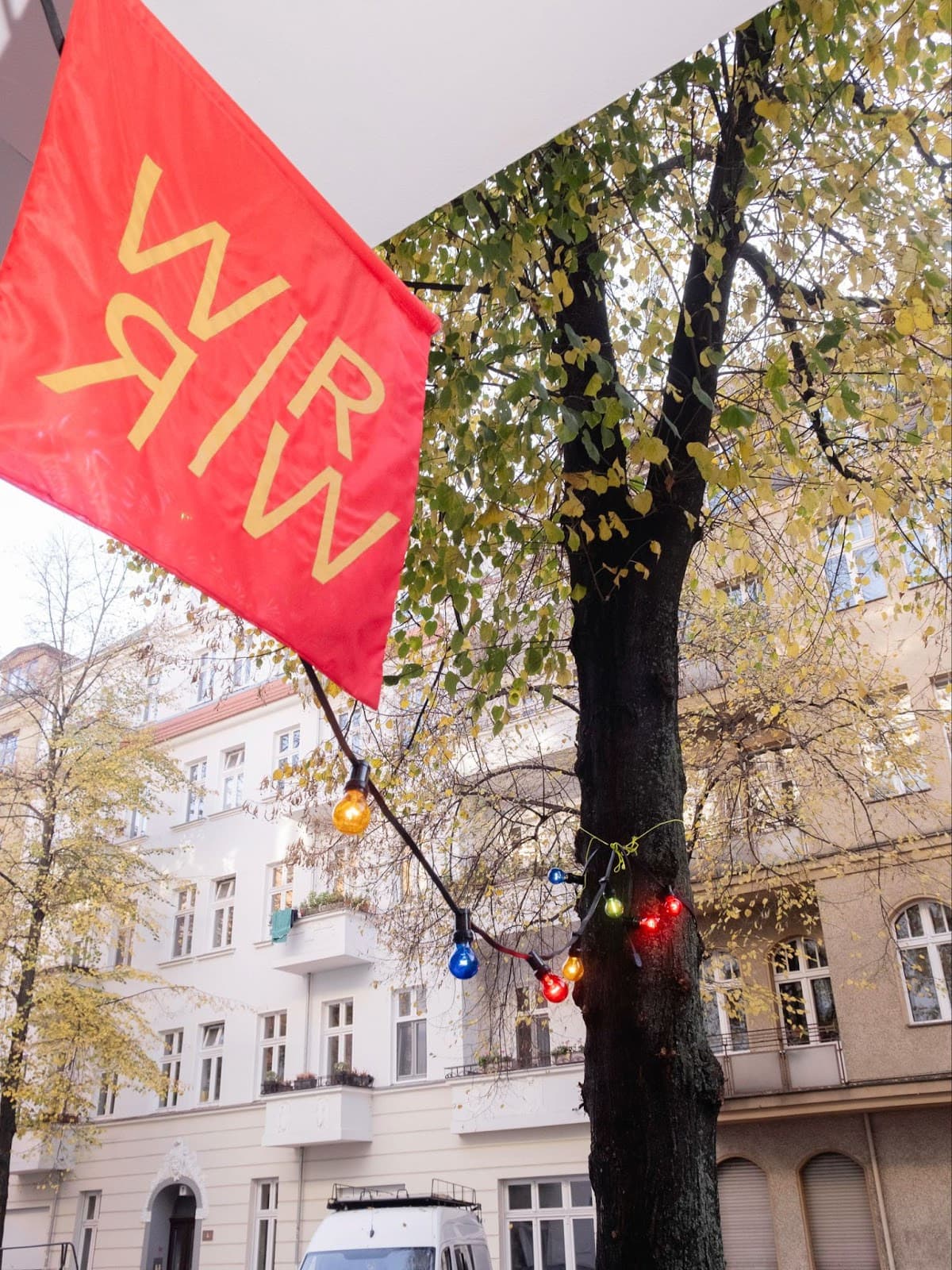
April: Yeah. It was really nice. The space where we did Buchstabensalat (called WIRWIR — which is my project space where I do a variety of projects together with my partner Adrian Schiesser) is small and conducive to conversation, so people felt very welcome. A lot of people said, "Wow, I’m really grateful you invited me. This is so nice. Thank you." It was also nice because it doesn't necessarily feel like Miss Read offers that kind of moment for conversation, especially for publishers coming from out of town.
CJ: Did any of those people who went to the first edition of Buchstabensalat come back to the second edition — FLYLEAF?
April: Some local publishers did, yes. And actually that’s how Idalia and I met Stefan Maneval, who is now my collaborator on FLYLEAF. Stefan runs Falschrum Books. He was one of the people we had reached out to and he came to Buchstabensalat. He actually came a few times over the three days. Then we visited him at his stand at Miss Read and had a really great conversation. Later I reached out to him and said, "Your studio is actually within walking distance of my space. I've had this idea for a long time — to create a festival where you can walk from place to place. Would you be interested in collaborating?" He said yes immediately. So that’s how we started. I reached out to him at the beginning of 2024 and we started working on the first iteration of FLYLEAF.
CJ: How did the festival get its name?
April: Stefan came up with the name. The word "flyleaf" can mean different things. Sometimes it's defined as the first page of a book, sometimes as the end page, but actually Stefan defined it as an insert that was put into books when they started to be published in duplicates. And the insert was this piece of paper that’s like the colophon mixed in with information about the publication itself, something that’s not a part of the book itself and that could almost fly away. We both thought that was really poetic and beautiful and had this whimsical feeling to it. So we agreed it would be the name.
CJ: And how did you arrive at the idea of organizing the festival across three different spaces?
April: The format of the festival had always been in my mind. I wanted to create this opportunity for walking from one location to another. My space is a fifteen minute walk to Stefan’s space, which is a bit long for some people. In the first iteration of the festival in 2024, the third space was actually right next door to Stefan’s space, so we wanted to find a third space that was really in the middle. Last year we walked around in the neighborhood looking for a place that would be perfectly central, and we finally did find it. It’s also a project space called Apartment Project. They generously offered their space to us and we organized everything around that. We expanded our team and brought in a few colleagues who are also publishers to help manage that third space. Stefan and I oversee the entire festival and make decisions together. It’s been a joy to work with Stefan because our working styles complement each other. We also agree a lot on the approach of creating an atmosphere that's conducive to conversation.
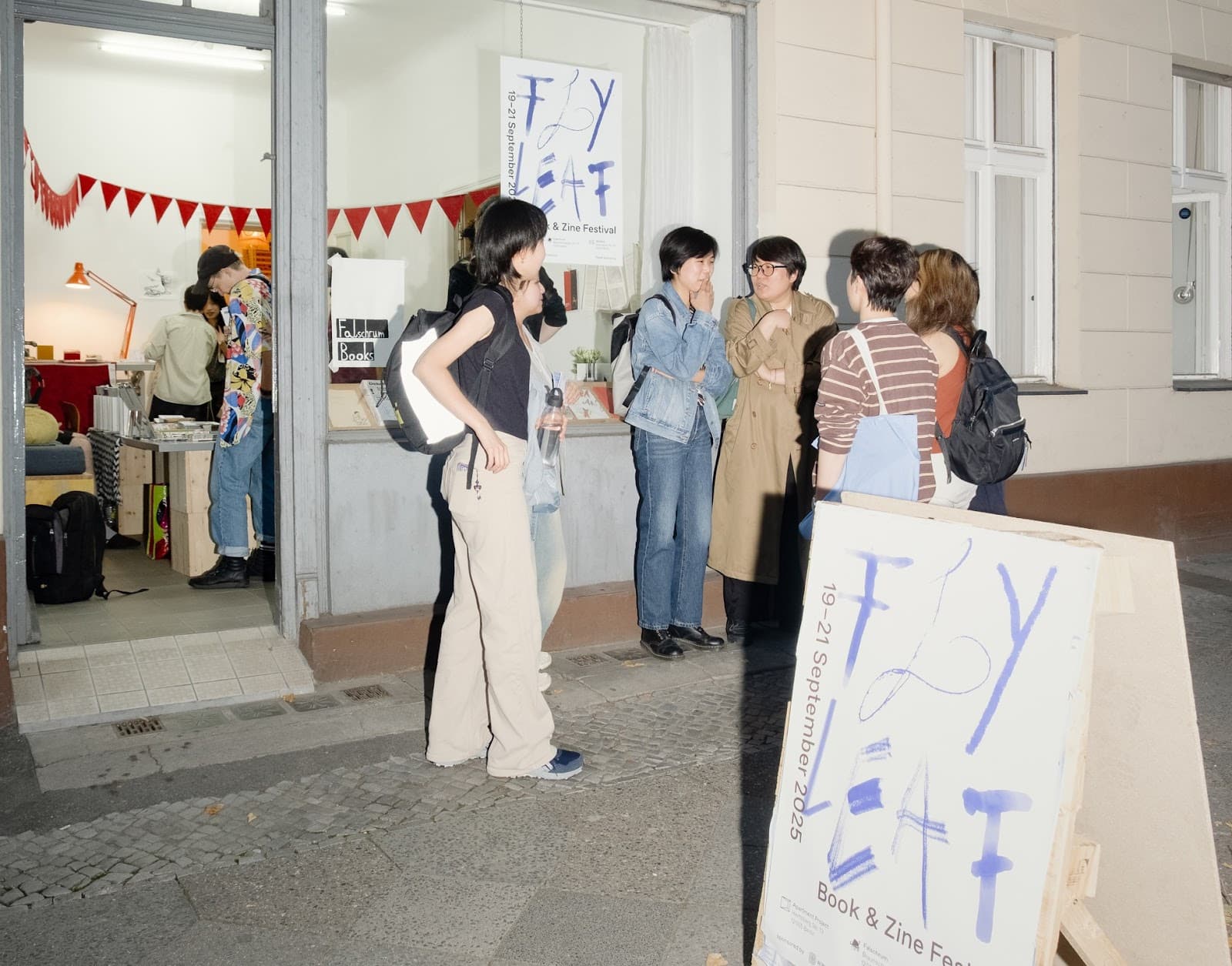
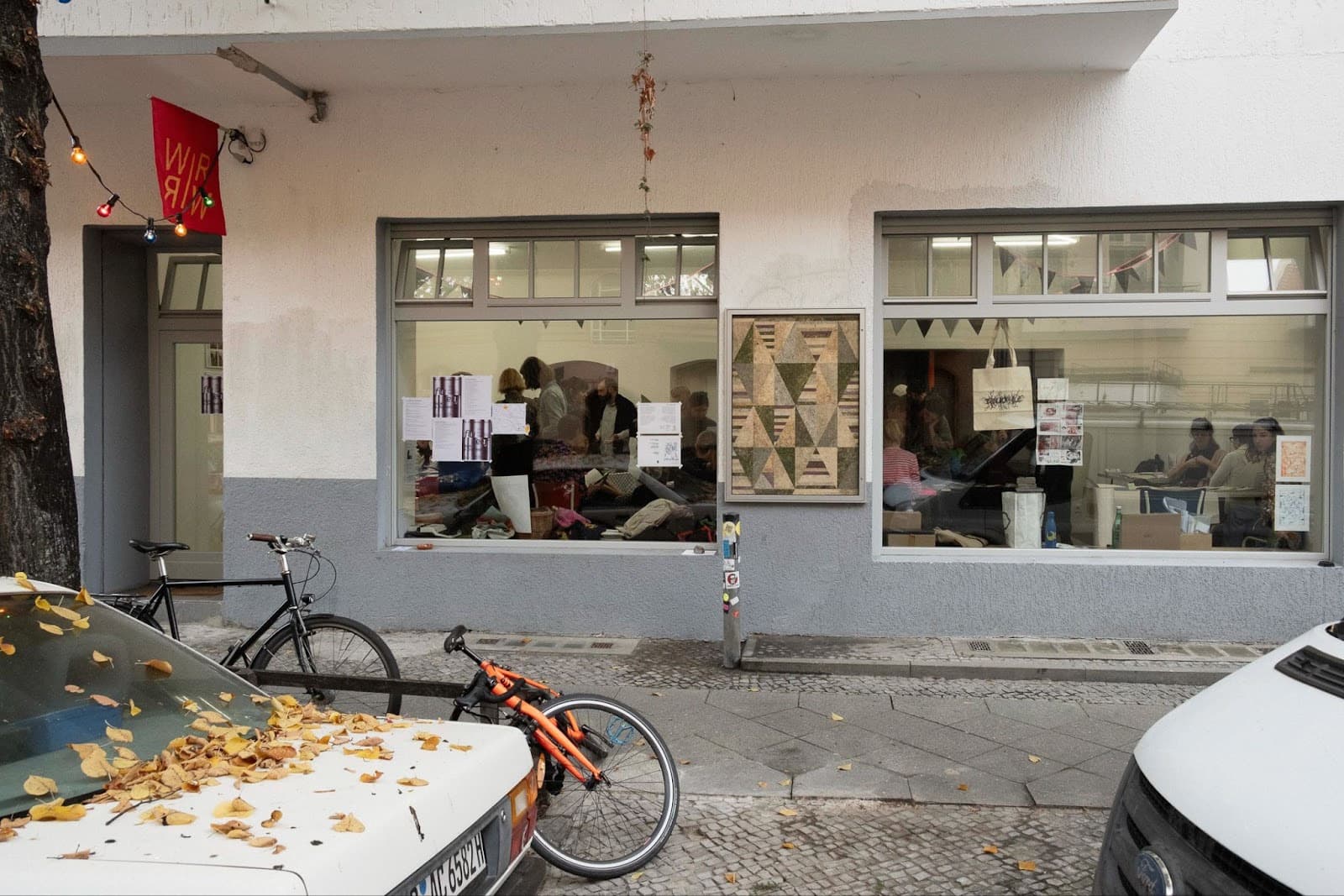
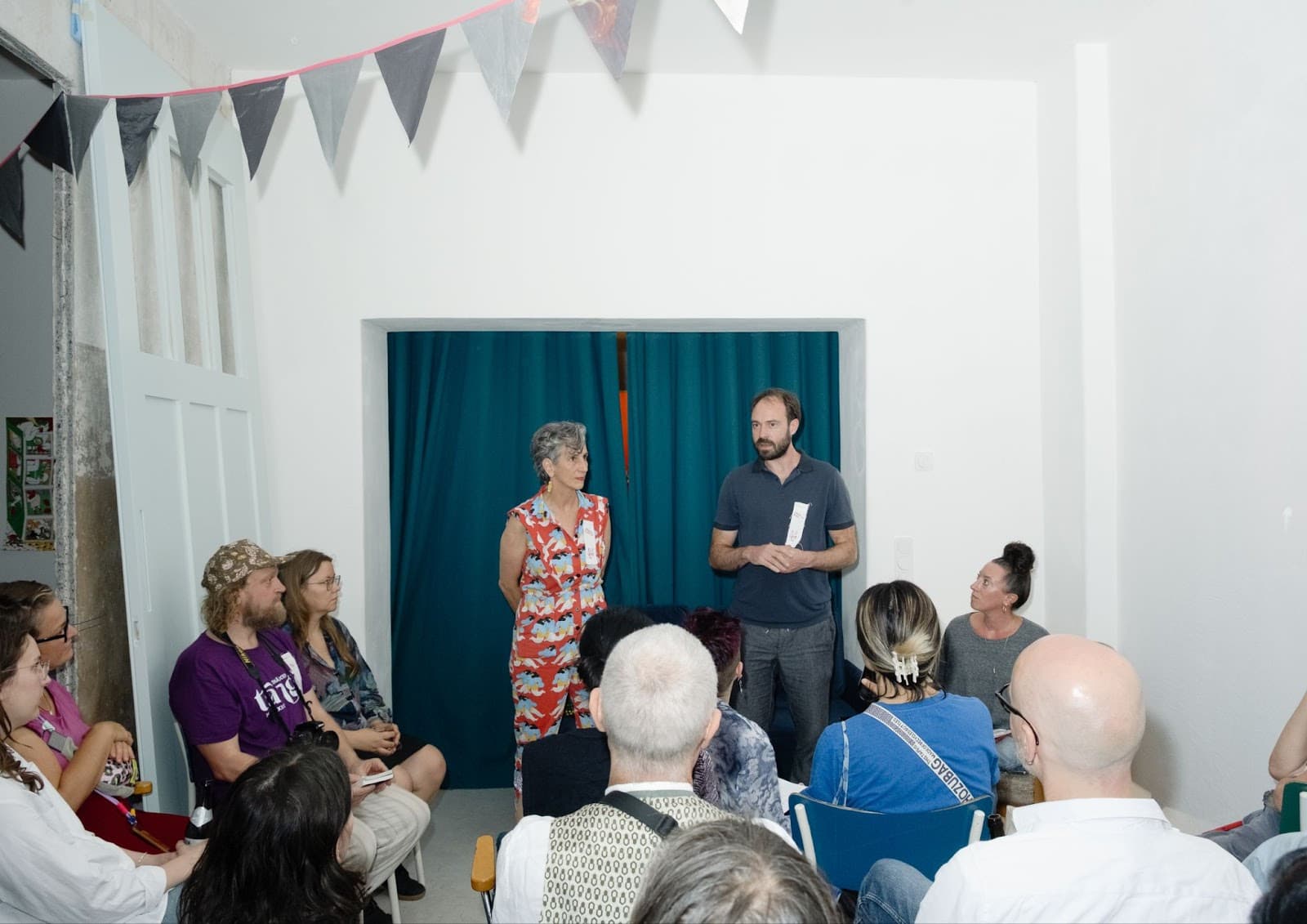
April: We also learned a lot from other festivals. I'm very inspired by the organizers of Bergen Art Book Fair. They're fantastic people and incredibly conscientious about the publishers who come to table there. One of the things I learned from participating in their festival last year is that conviviality toward publishers should be number one. Because people are putting their hearts and souls into these publications. None of us are doing this for money — we're doing it because we love it, because we love the community and the conversations. So Stefan and I really wanted to support that. For example, we had a cook stationed at each location so food was made for all of the tablers. There was also cake at each location, including coffee and tea. All of that was paid for by the table fees, but we tried to keep the table fee very low at EUR 25 for three days.
April: Another thing we adopted from Bergen is what they call a book buffet. It’s a single table with multiple publications by different publishers. It’s a great way for those with just one publication to be there, to meet each other and still have their work present. We also want to make sure we give as much airtime as possible to as many people as possible, and a lot of that comes from giving people flexibility: if someone only wants a table for one day, they can do that; if they want the full three days, that’s possible too. We try to accommodate people as much as we can. Last year we had around 85 or 90 publishers participating, and we worked with everybody's schedule to try to give people the maximum possibility that they were requesting to be a participant in the festival.
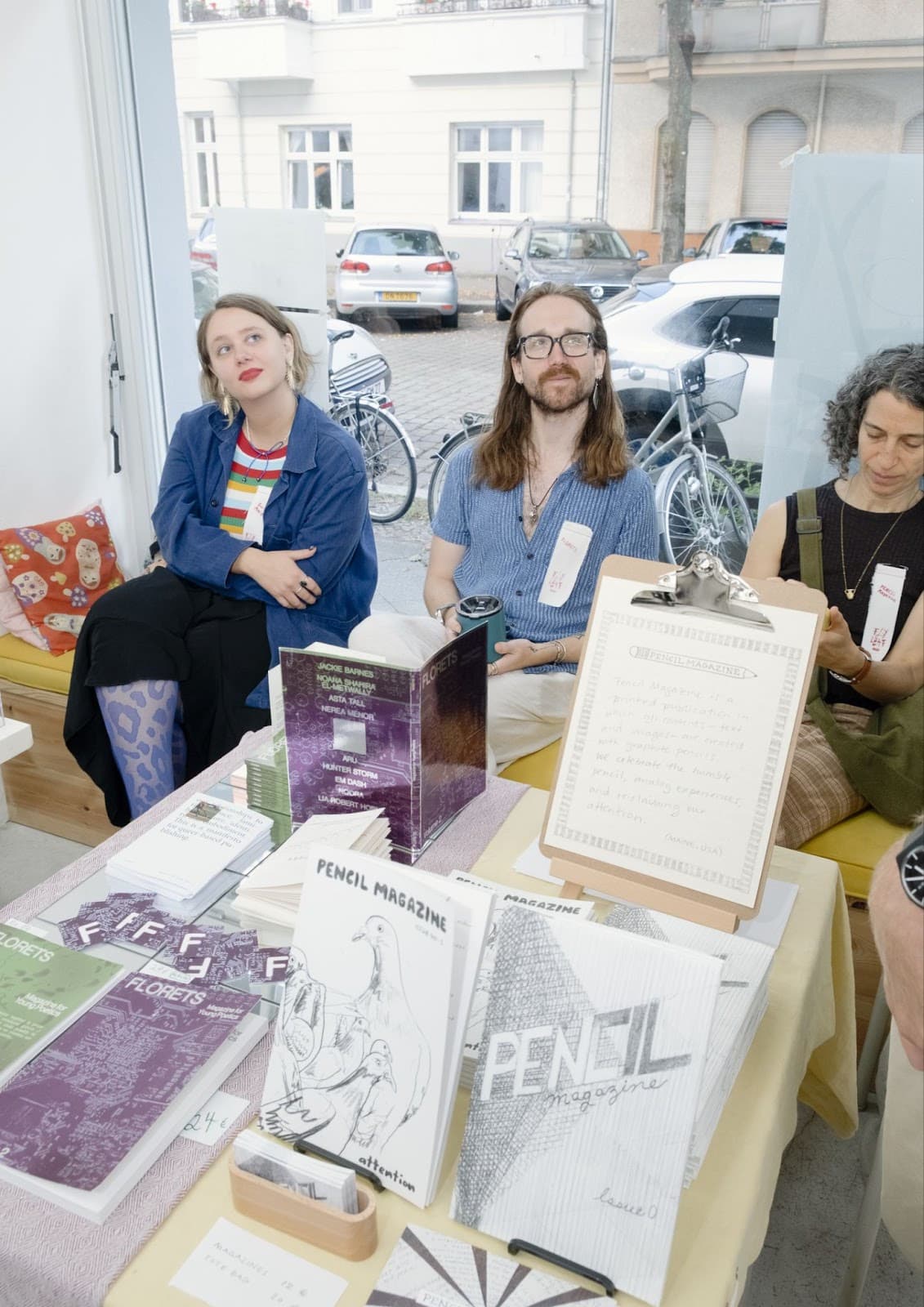
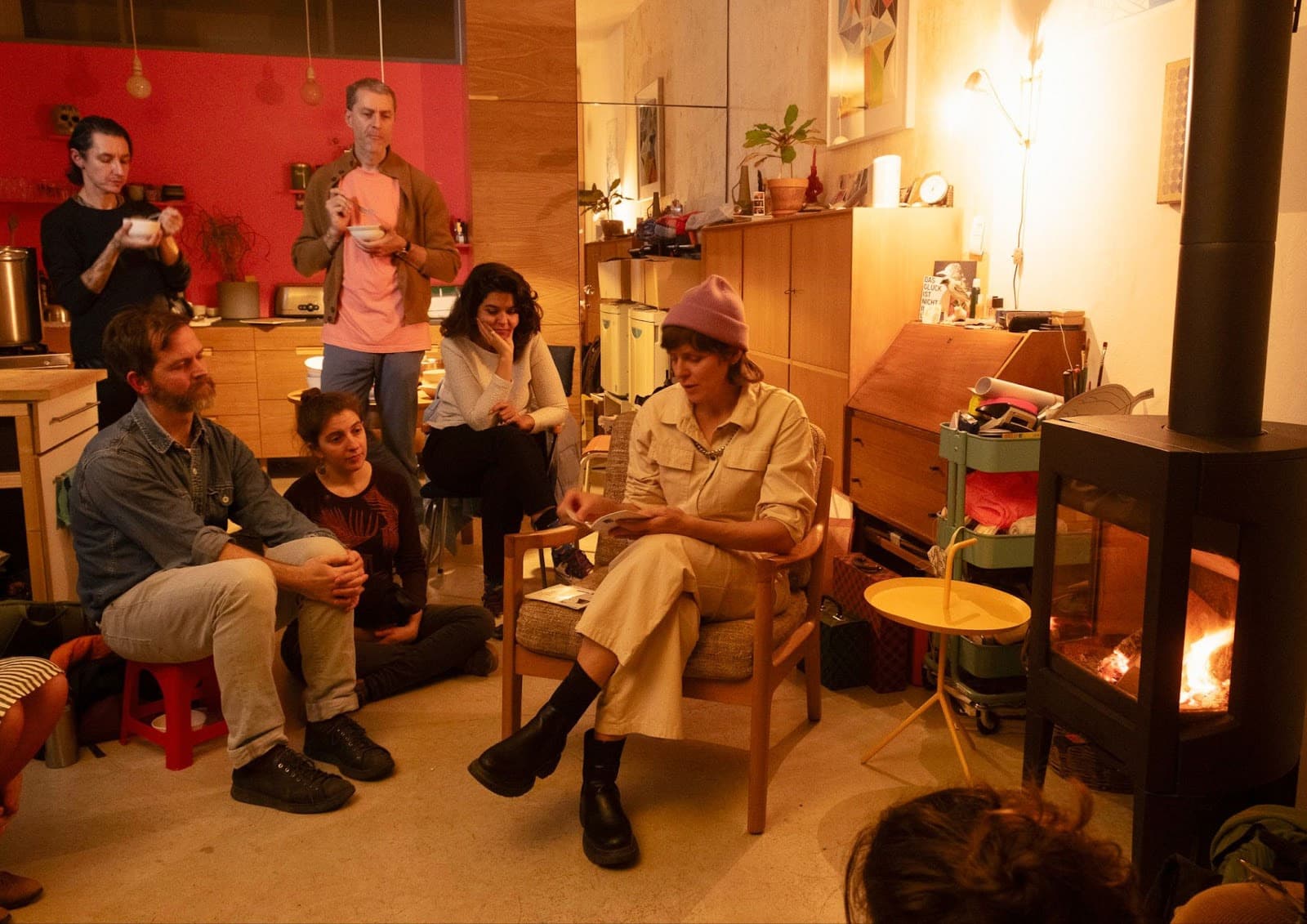
April: We also give everybody an opportunity to participate in what we call the fireside chat. Originally it was actually a fireside chat because we had a wood-burning stove in the space. People could present an idea or a project, read a poem, or share a text. Stefan focuses more on poetry and literature, while I focus more on visual arts, so between us, we kind of cover these grounds. That was really amazing. Last year we had about fifteen people presenting at the fireside chat. It was quite warm, so we projected a fire on the wall for people to sit next to. It was really well attended and very fun. We also organize a big publishers’ brunch where everyone brings something to contribute to the table. Everyone is invited so even if you only table for one day, you can still come to the brunch. Last year we had about forty people coming for the brunch, which was super fun. Those are some of the ways we support the publishers.
 presents his project at FLYLEAF 2025 fireside chat with a projected fire.](/_next/image?url=https%3A%2F%2Fhsraqvctzwwdwluvtlnf.supabase.co%2Fstorage%2Fv1%2Fobject%2Fpublic%2Fstory-images%2Fflyleaf%2Ffireside-2025-2.jpg&w=3840&q=75)
CJ: That’s amazing. I feel like we should really up our game here.
April: (laughs)
CJ: The cook at every station, the book buffet for people who only have one publication, maximizing everyone’s airtime, the fireside chats, and then the brunch for publishers — were those all inspired by your experience at Bergen Art Book Fair?
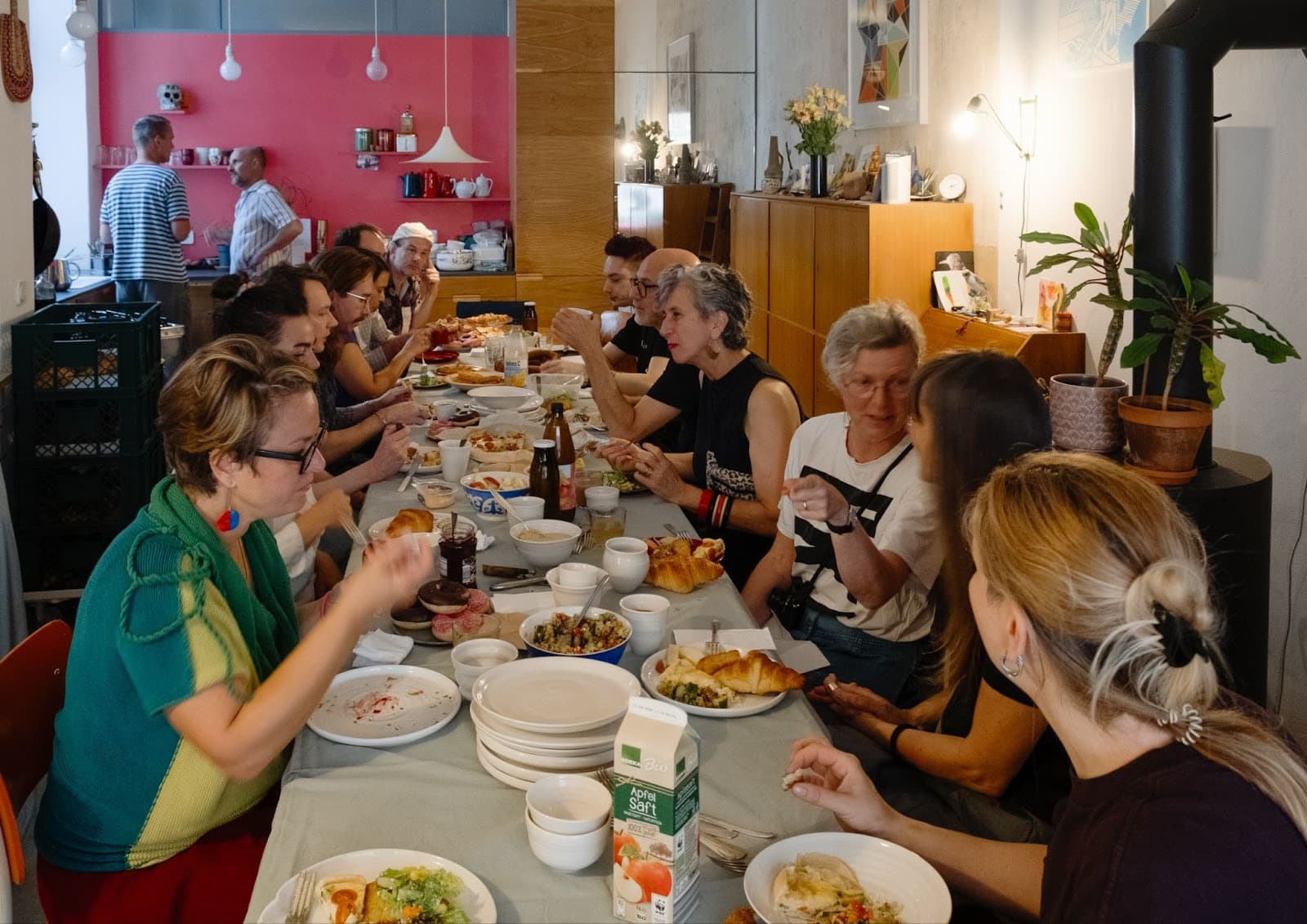
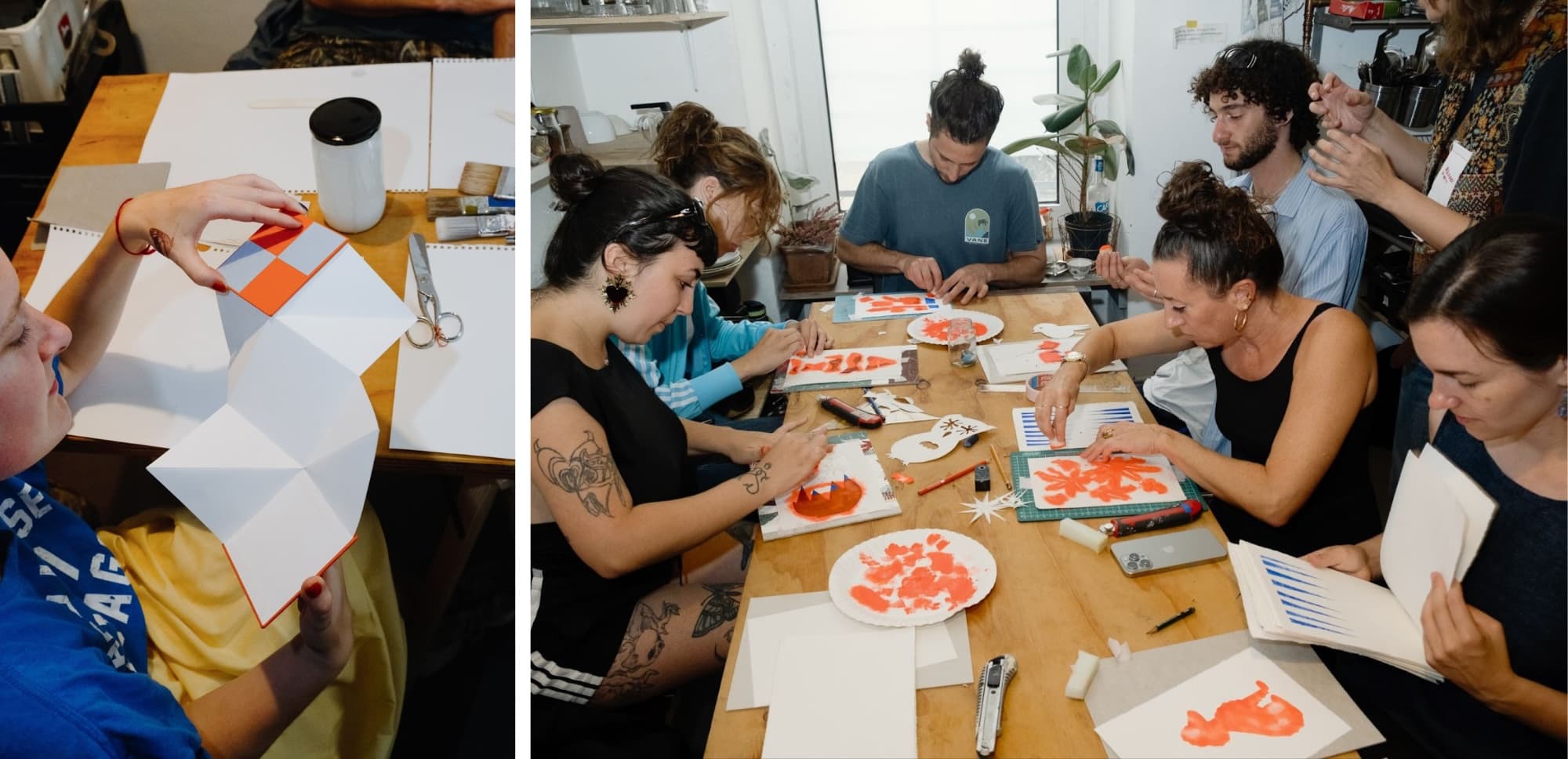
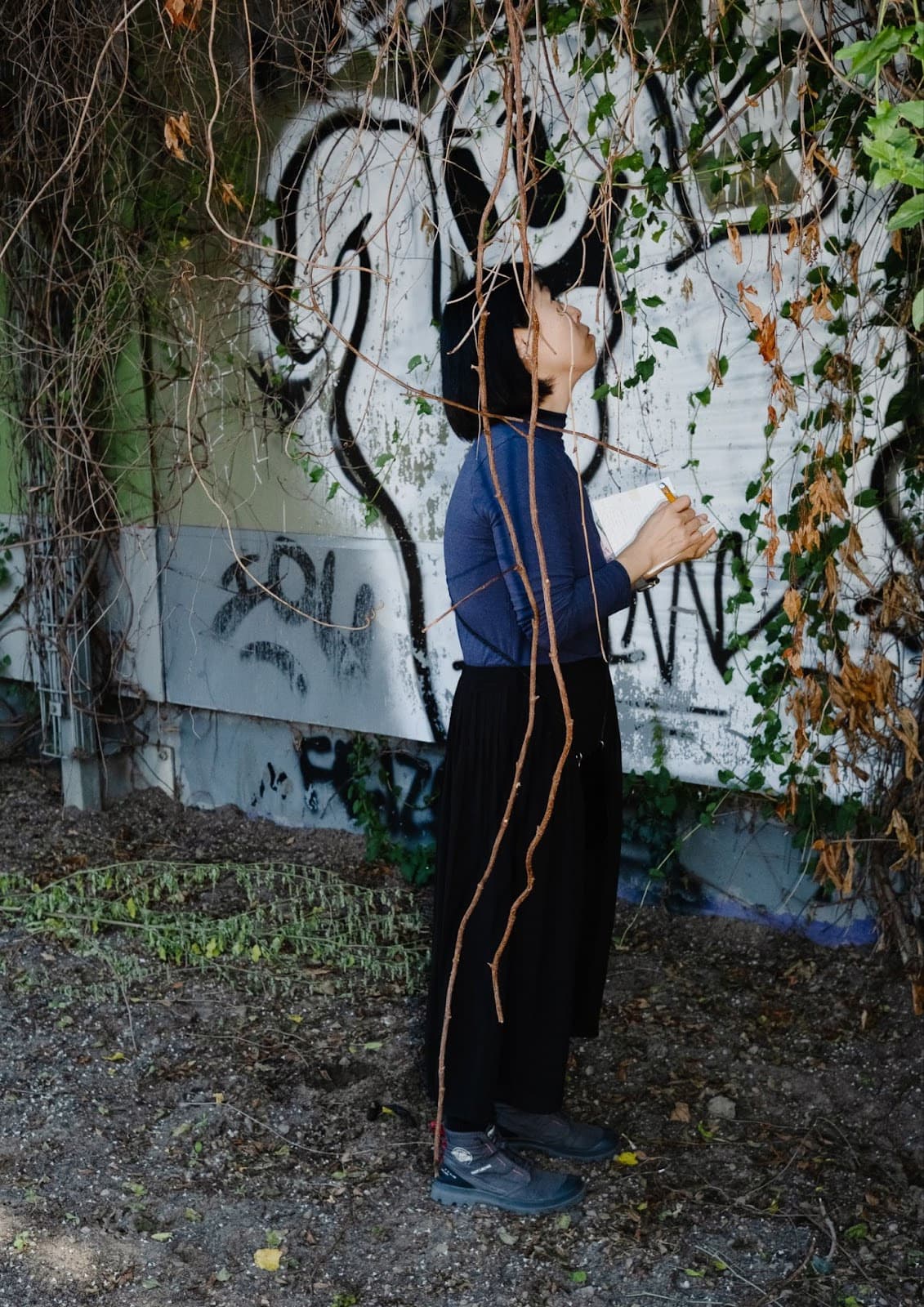
April: No, not necessarily. Some of it was, for sure. But other things were just ideas we had ourselves. The food element, you know, having food available for publishers all the time — that was inspired by Bergen. They know that it’s very expensive in Norway for people coming from abroad, so they have breakfast and lunch available for the publishers the whole day. You can go into a break room and food is continuously being stocked. They have people managing the buffet the whole time, cleaning it, making fresh coffee. It’s really nice. That was a wonderful element to experience. But the fireside chats were our own invention. In addition to all of this, we also have public programming for visitors. We have art walks: we had a poetry walk, a drawing walk, and an origami bookbinding workshop. There was another workshop too — I’d have to look at the program to remember exactly. But we had a few workshops, and it was really nice to also include the public. People could participate at every station and every location had something different happening.
CJ: Were the walks designed to guide people from one space to another?
April: No, not exactly. They were within the neighborhood itself. I think the poetry walk might have started at WIRWIR and ended at Apartment Project, but they took a very circuitous route. They stopped along the way and invited people to write poetry or read poems at different locations. It was very choreographed. I wasn’t able to join because we had to manage the space, but people loved it. There were about fifteen participants.
CJ: I love how it adds another layer to the whole festival experience.
April: Yes, absolutely. On the first night of the festival we also do a party for all the publishers. We gather at WIRWIR and then consciously walk together as a group over to Stefan’s space, Falschrum Books. For the last two years we have done the party at his space. And that’s really lovely because again, lots of wonderful conversations come around, and Stefan has organized food for everybody over there as well. We also have a bit of programming and some music. So it’s really nice and a great chance for the publishers to meet each other.
CJ: What kind of space do you think FLYLEAF creates within Berlin’s independent publishing scene?
April: From what local publishers have told me, FLYLEAF is a place where publishers feel cared for. It is definitely true that the conversations are very dynamic throughout the weekend. A lot of Berlin-based publishers have met each other through FLYLEAF and have gone on to collaborate on projects, and that’s pretty wonderful. I think FLYLEAF has created a new space in the way of a festival celebrating printed matter where publishers feel that they can exhale. That exhale is so important as it connotes safety and support.
CJ: Have you seen it lead to lasting connections between publishers?
April: Yes. One person told me that they ended up sharing a studio with another publisher that they met at FLYLEAF. Things like that have happened. There are probably many things I’m not even aware of that have come out of those connections, and that’s really beautiful. We’re trying to make the festival a bigger thing so more people are aware of us, but at the same time we are very local and small, and that’s the beauty of it as well — that it’s a small festival. Last year we had about 500 visitors, which is something. People also came from abroad to participate, including countries like Spain, Poland, the UK, Austria, France, and Sweden, and then there were three publishers who came over from the United States as well.
CJ: And those were people who came specifically for FLYLEAF, not because they were already in Berlin for something like Miss Read?
April: They just came to participate in FLYLEAF. When I realized that I almost started crying. It was so humbling, and it’s so amazing. It made me feel like we’re doing the right thing, that we’re approaching it the right way, that we’re tapping into something people really want, which is community, collective conversation, and this collective kind of togetherness.
CJ: How did FLYLEAF find its people? Was it mostly through word of mouth, or were there other ways people heard about it?
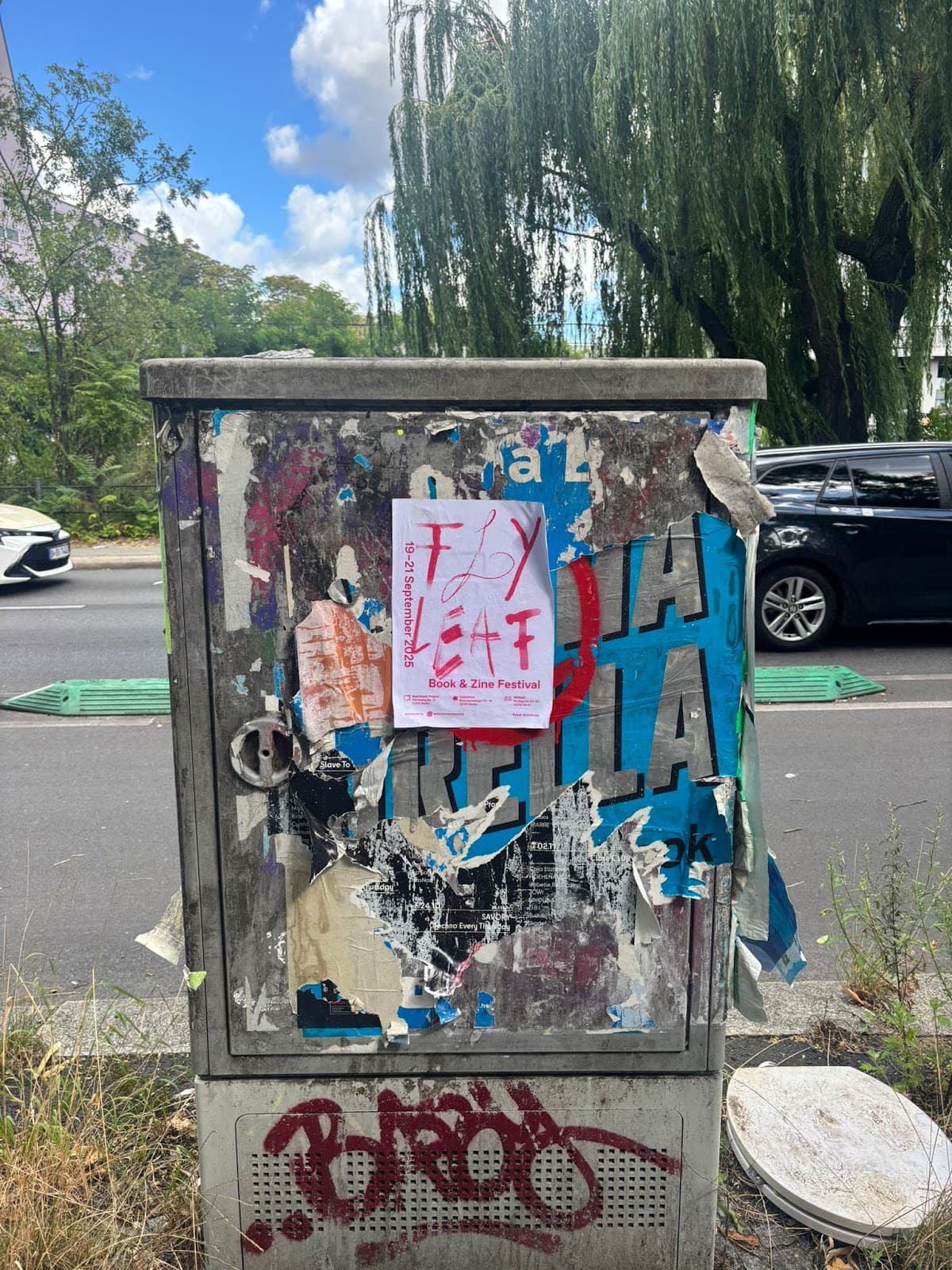
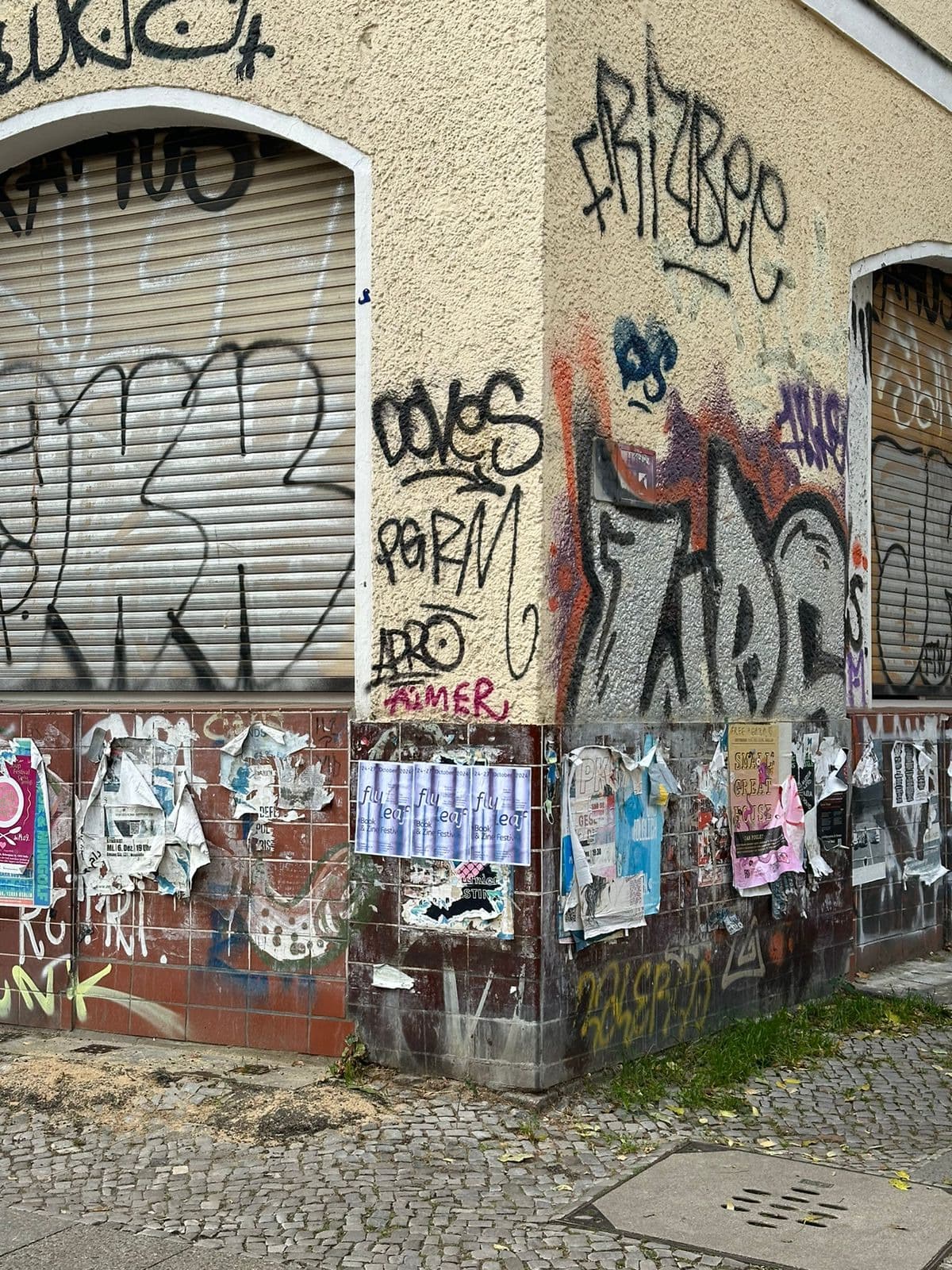
April: I think it’s mostly word of mouth. After the festival last year we decided we should have an Instagram account, and so I started one, and I hope that this will help us more out into the social media world. But I think publishers definitely talk to each other about festivals and fairs. Among publishers, we’re constantly sharing information — did you hear about this festival, should we go to that one, maybe we should travel together? We want to support each other, and we like being together, and it's really wonderful to be together in these contexts. So I guess it's happening like that. We do campaigns and newsletters. We also do a lot of posting in the streets. I printed a lot of flyers about the festival beforehand and then those flyers were wheat-pasted in various neighborhoods in the city. We have a pretty good wheat-pasting team, so it really gets around, and then people come because they see the flyers on the street, which is one of the main ways of information dissemination in Berlin. That works well for us.
CJ: Are the posters in English and German?
April: Actually they’re only in English. That’s something we’ve talked about a lot. Stefan is German, but the festival is very international, and we decided to do everything in English. WIRWIR and Falschrum Books are located in Berlin-Neukoelln, which is a neighborhood that has about 160 countries represented, so it’s phenomenally diverse. So English feels like a good place to start.
CJ: Did the international dimension happen somewhat organically for the festival, or was that always part of the vision?
April: It’s intentional in the sense that this is very much our ideal. We would love to have varying voices, and we would love to have people coming from other places, so we’re incredibly happy that it’s actually happening. At the same time, it’s happened even more than we initially imagined. We’d love to connect with even more people internationally, but of course that also depends on practical things — whether people can afford to travel, and whether the timing works. So we’re also trying to think carefully about the best time of year for the festival. Originally it took place at the end of September, but this year we moved it to the third week of August. We may eventually move it to spring, because autumn is already so crowded with book and zine festivals.
CJ: Do you have a curation or selection process for publishers?
April: We try to stay open and give a platform to as many people as possible. The main thing we’ve had to refine is the application process. Sometimes people submit very poetic statements about their publishing vision, but that doesn’t necessarily come through in the publications they show us. Or they don’t include images, so we end up spending a lot of time searching for their work online. So we’ve refined the application process in the hope of helping people articulate their approach a bit more clearly.
CJ: I also wanted to ask whether co-organizing FLYLEAF has influenced your own creative practice and your own relationship to publishing.
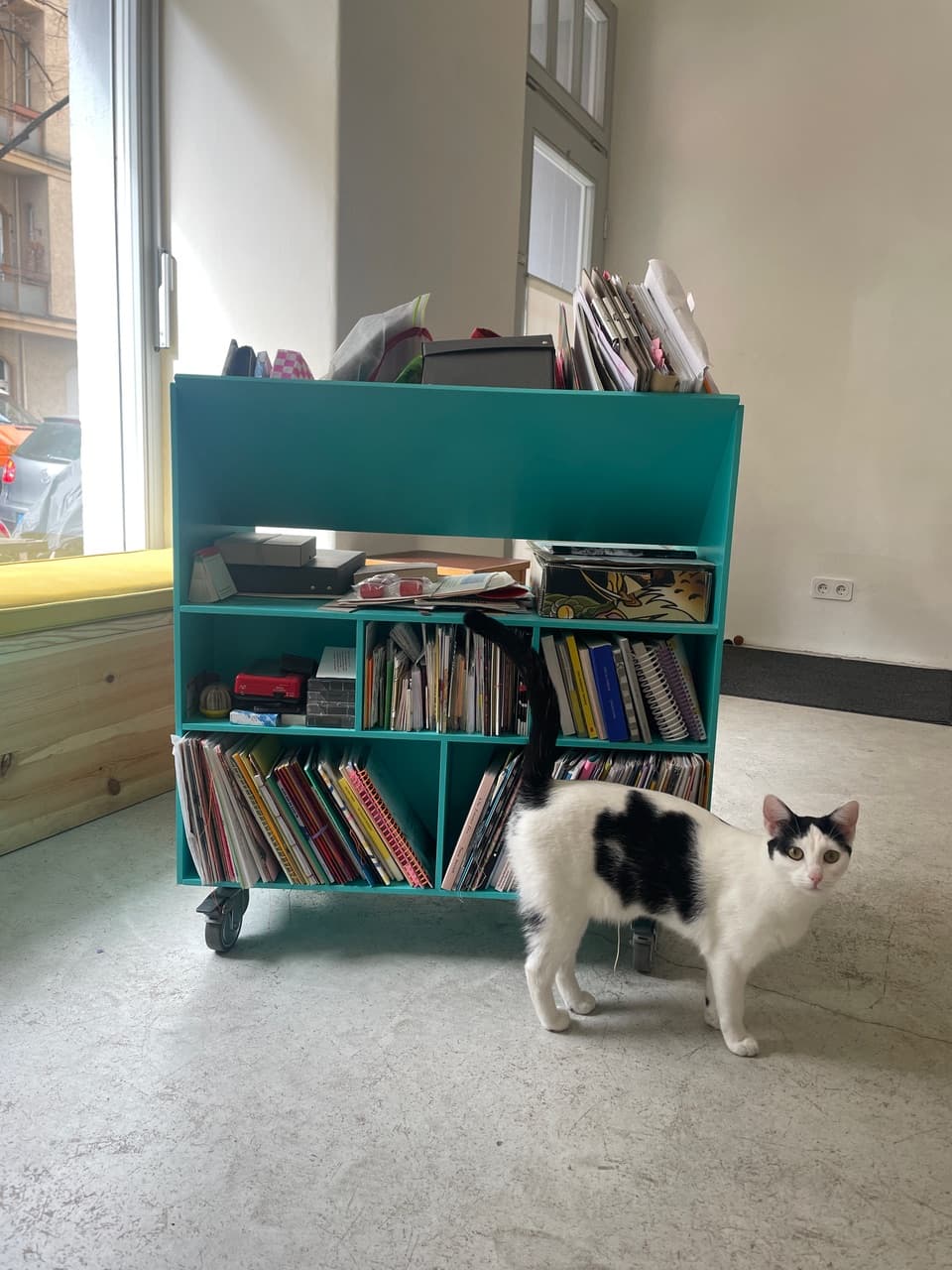
April: I'd put it a little differently — FLYLEAF has been folded into the way that I work in terms of creating socially engaged events. My work as a visual artist is very much about creating socially engaged experiences where people can come together and have conversations. FLYLEAF fits very naturally into that approach. It has helped me recognize that what I am doing makes sense for others, that it supports people, and that makes me feel like I’m going in the right direction. And in terms of publishing, it has introduced me to many small press publishers. I’ve made so many beautiful connections, and I’m constantly inspired by the people I meet and by the conversations I have about publishing, about idea generation, about craft, and about how people make things and do things, and that’s been really exciting. It’s information that I take and really enjoy sharing with my students. I’ve also built up a library of publications from what I’ve gathered and traded with other publishers. My partner even built a special rolling shelf for it. It has different compartments for different sizes of publications, and there are probably a few hundred in it by now. It’s incredibly inspiring to explore all the different formats, sizes, and ways of making a zine.
CJ: Especially given that you also run a small press yourself.
April: Yes — it’s called WIRWIR PUBLISHES.
CJ: Do you also table at FLYLEAF as a publisher?
April: Yes, I do!
CJ: How do you juggle that?
April: It works well mostly because my partner generously helps run the table while I move around checking in with the publishers. WIRWIR, our space, is only about fifty square meters, so everything is close together. Stefan manages his own space and the third location has its own team. So everyone is fairly self-sufficient. I like to visit the other locations during the festival as well — so I’ll jump on my bike and ride over quickly to say hi, but mostly I stay present with the publishers and visitors here at WIRWIR.
CJ: Is there something about the upcoming edition that you’re particularly excited about?
April: One thing we’d like to include as a new component to the festival is music. We’d love to encourage publishers who also make music to perform during the festival. We’re including a question about that in the application. The application will open in the third week of March and close at the end of April. Because the festival is in August this year, we’re also thinking about doing a pre-festival event in a park. Maybe a picnic or something informal that brings people together before everything starts. Especially for people coming from abroad.
CJ: Anything else you’d like people to know about FLYLEAF, for those who might consider applying or visiting?
April: I think it’s a great opportunity to be a part of a different type of publishing event. We very intentionally use the word festival instead of fair. We want it to feel like a celebration of publishing and a celebration of coming together. That idea was influenced by a beautiful publication/essay called The Future of Art Book Festivals by Moritz Gruenke from Gloria Glitzer. I was really inspired by Moritz’s approach. I like the idea around the celebration of publishing as a phenomenon, as opposed to concentrating on the idea of the fair, which feels much more inherently about moneymaking, and we all know that we are not doing this for the money. We’re doing this because we’re contributing to the creation of a group of publishers that focus on printed matter. That group is expansive and amoebic, and while it changes it envelops publishers by giving them a platform. That’s really our approach. I mean, of course publishers are buying and selling, but it’s also about many other things. It’s also about care, about conversation, connection, and meeting other publishers you wouldn’t have the chance to meet otherwise. That’s why I think FLYLEAF is such a special festival to visit and/or participate in — because it can feel very different from what people may have experienced before in a book-fair environment.